Time & Place | Edition: Trees
Meet James Lewis Tucker, printmaker and poet living in Mendocino. James waxes poetic on his favorite trees, living in time, and finding purpose in the process.


EDITION: TREES
SEASON: S26
MOON: WAXING
TIME
For a monthly bulletin of fun, festive & fruitful events around the Bay, subscribe to our newsletter here.
PLACE
FEATURING: James Lewis Tucker (Sun Tower Studios)
Tell us about your project & what you do?
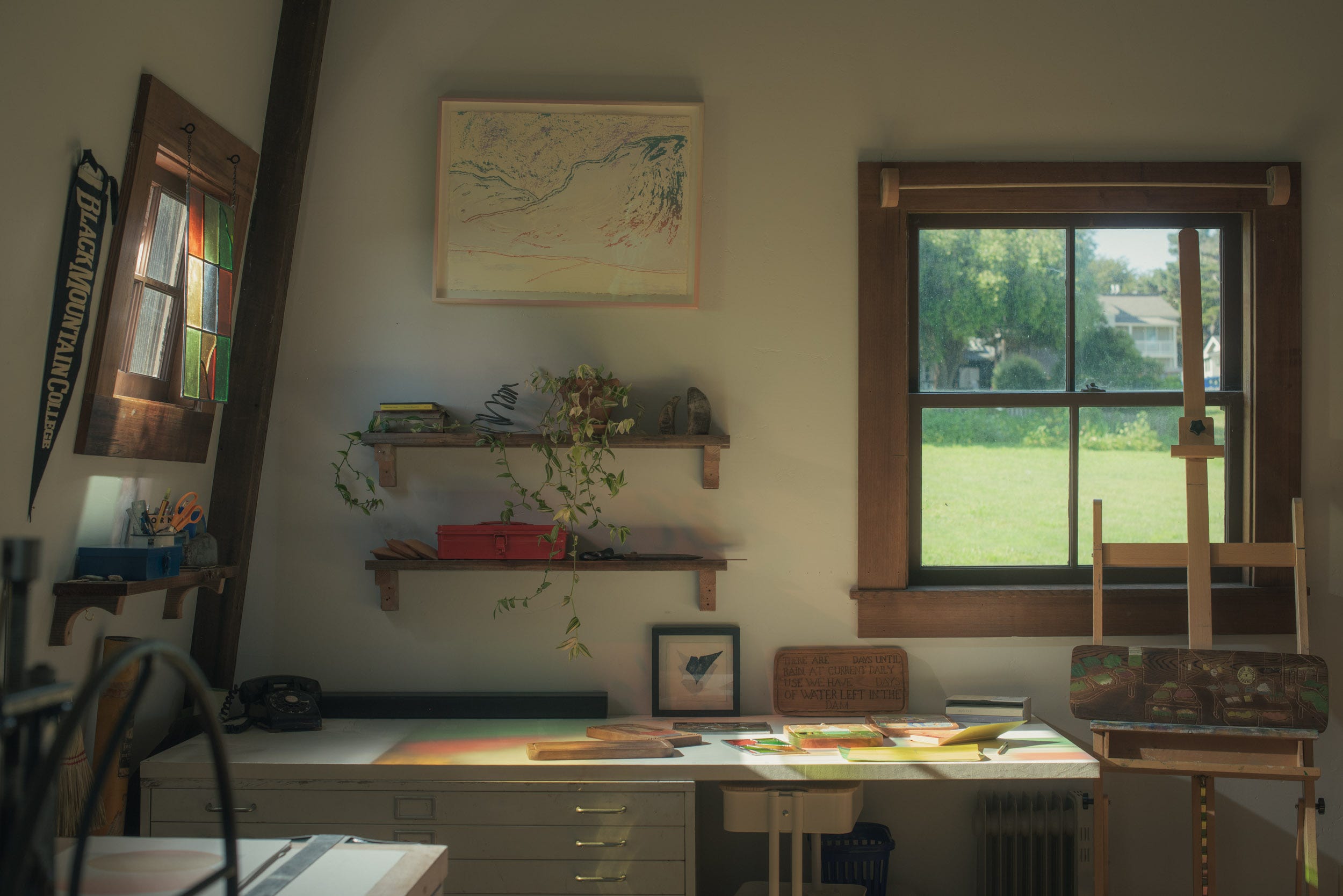
I’m a printmaker and poet living in Mendocino. I have a knack for odd places — a 1926 fishing boat, a Zen monastery, a hippie commune turned art retreat. Now I split my time between Salmon Creek Farm and a 19th century shingled water tower in the village, where my partner Jessica and I run Sun Tower Studios. I’ve been writing about all of it — the moves, the making, the letting go — in my Substack newsletter, Don’t Think Twice.
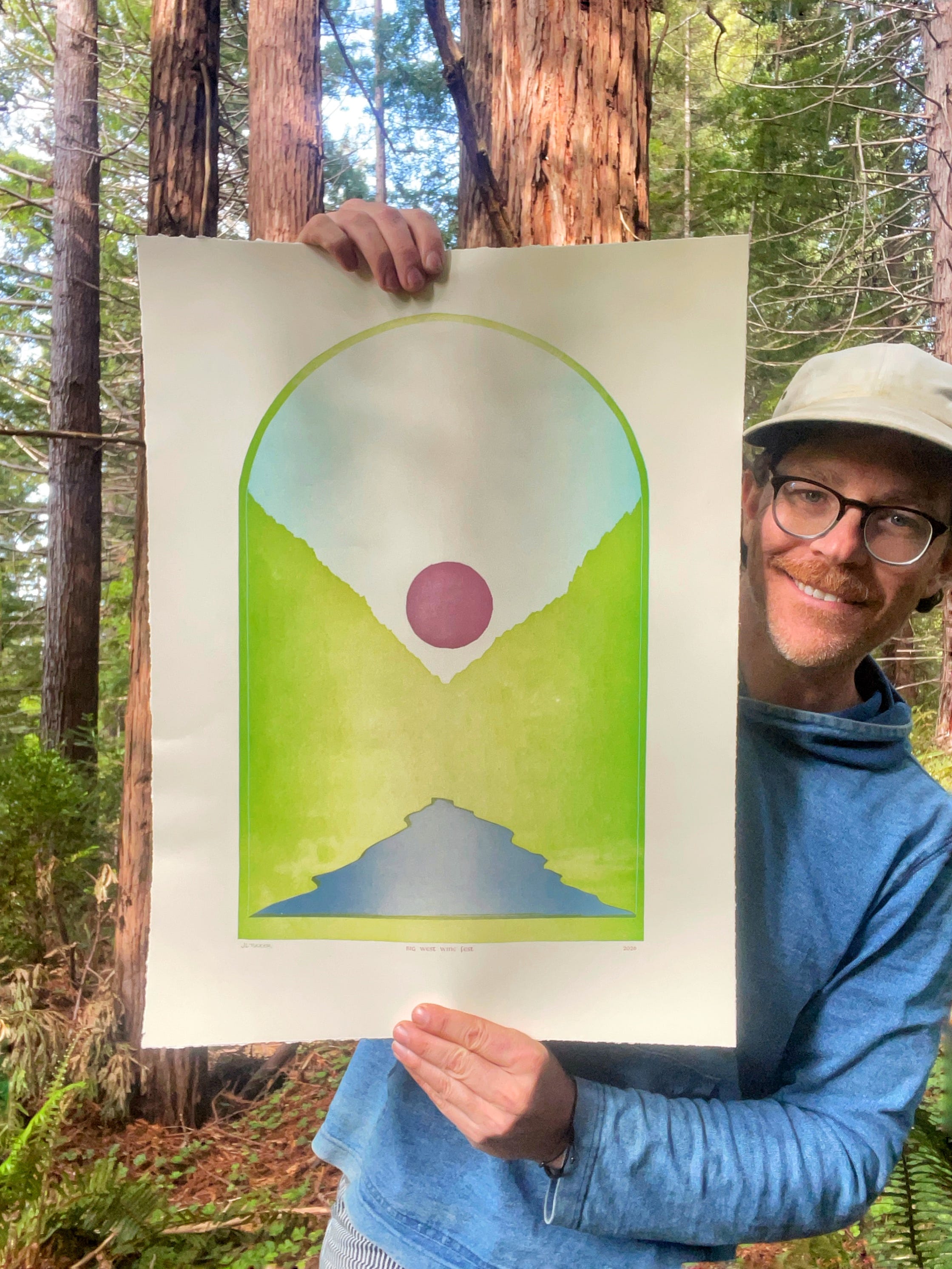
Before this I founded and ran The Aesthetic Union in San Francisco for ten years. A letterpress print shop in the Mission District. Mostly commercial work, but it’s where I started carving and printing from wood and linoleum blocks, making small editions of my own. That work mattered to me in a way the job printing never quite did. I sold the shop in 2023 and found myself here. This print for Big West Wine Fest is my first major work since. A return, after a few years of necessary quiet.
What anchors you to Mendocino?
My work is about landscape and our inescapable relationship with it. Mendocino sits on the edge of two worlds. To the north and west, the headlands push out into an ocean that is seldom calm. Walking to the bluff edge is what Robinson Jeffers called standing before something inhuman — beautiful and utterly indifferent. To the southeast, the Big River runs emerald and slow into the bay. Low tide means mussels on the rocks. The beach holds whole driftwood redwood trees, bleached and sculpted by the water. River otters, seals, the occasional shark.
I grew up near a Victorian living history farm. As a kid I was fascinated by how people worked with nature rather than against it — windmills pulling water from wells, gravity feeding it down to the house. Mendocino has thirty-odd water towers. To me they’ve always been a symbol of that ingenuity. The land equivalent of a wooden sailing ship. Jeffers built his own tower studio in Carmel and wrote from it for decades. Jung built one on the shores of Lake Zurich. I understand the impulse now. It’s not just the view from the upper windows. It’s the feeling of being slightly removed — connected to something larger than the day’s errands.
What do you love most about being a printmaker in California?
The printmakers, honestly. William S. Rice spent decades in the East Bay making woodblock prints of California gardens and coastal scrub. Tom Killion has been carving the Sierra and the Sonoma coast for fifty years. Ed Ruscha made urban California into his subject matter — deadpan, luminous, impossible to imitate. David Lance Goines. There’s a lineage here, running from the Grabhorn Press to zine makers. The light and landscape matter too, but for me the people came first.
How does your spiritual practice inform your relationship to printmaking?
Printmaking is a process. I can’t start from the middle. I rarely know what the finished print will look like when I begin. Which paper. Which ink. How colors will overlap in the layers. What each tool will leave behind in the wood. Every decision shapes what comes next, and none of them are reversible. That’s especially true in reductive woodcut — once you carve away, it’s gone. The block is destroyed by the time the edition is finished. You’re left with what you committed to, nothing more.
I’ve been practicing Zen for about seven years. The practice keeps showing me that every step is both the lesson and the preparation for the next one. Printmaking taught me the same thing before I had words for it. So did writing poems.
What excites you about this season in Mendocino and this season in your life?
Since November, working at Salmon Creek Farm has brought me close to the changing of seasons in a way I haven’t experienced since childhood. This spring came early. A warm spell in March pushed the fruit trees into bloom ahead of schedule. Lettuces, favas, chard on my plate now. Strawberries close behind.
In the studio, spring means visitors. I’m launching a workshop series out of the water tower —bringing people in to print on the vintage presses, learn the process, make something with their hands.
The Big West print is part of this too. A few years of quiet, reading and observing and letting things fallow. Now the work is coming back. Standing in the Guerneville redwood grove and feeling that canopy close over you — that’s what the print is trying to hold. I’m making it as a reductive lino and woodcut, which means each layer carved away is gone for good. The grove only exists in the finished print. That felt right.
Tell us about your favorite tree!
I grew up on a Christmas tree farm in New Jersey. Pines and firs were my first trees. I could say the redwoods — they’re ancient and staggering, and the Giant Sequoias do something to me that Stonehenge does. They make my time on earth feel brief in the best possible way.
But my heart goes with the Douglas fir. Not as long-lived as the redwoods, more numerous, less celebrated. We grew them on the farm. I didn’t know until I came west that they grew to such size. My old fishing boat was built mostly from Douglas fir. The grain, the color, the smell of it. Some loyalties start early and hold.
What’s In & Out for you this season?
IN: Prescribed burns. Universal basic income. Japanese woodblock printing. Physical media. Dumb phones. Pen pals. Oil lamps.
OUT: Hoarding wealth. Branding yourself. Second homes. Being rude. Apathy. Brain rot.
 | A guest post by
|